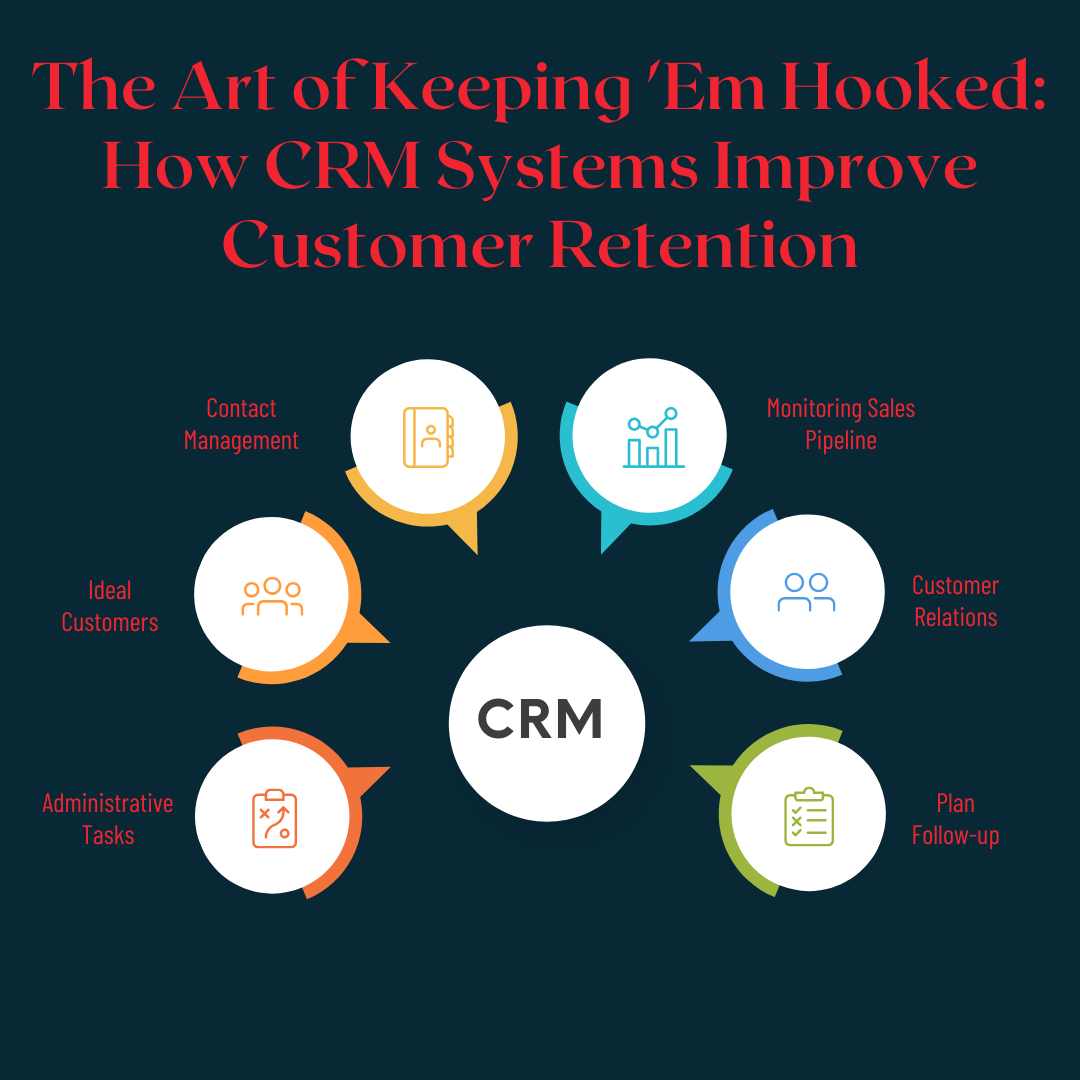
The Art of Keeping 'Em Hooked: How CRM Systems Improve Customer Retention
In the wild world of modern business, finding a new customer is a bit like dating in your thirties—expensive, exhausting, and filled with people who might ghost you for a cheaper subscription. We’ve all been there: you spend a small fortune on flashy ads and "look at me" marketing, only for the customer to wave goodbye the moment a competitor offers a 5% discount or a free branded tote bag.
But what if you could stop the revolving door? What if you could turn that one-time buyer into a lifelong fan who wouldn’t dream of leaving? Enter the unsung hero of the digital age: the CRM (Customer Relationship Management) system. If you’ve ever wondered how CRM systems improve customer retention, you’re in the right place. Grab a coffee (and maybe a snack, we’re going deep), because we’re about to transform your "ex-customers" list into a "loyal legends" club.
Why Retention is the New Acquisition (And Why Your Wallet Will Thank You)
Before we dive into the "how," let’s talk about the "why." In 2026, the digital landscape is noisier than ever. Privacy regulations have made targeted ads more expensive, and consumer skepticism is at an all-time high. The result? The cost of acquiring a new customer (CAC) is now roughly five to seven times higher than keeping an existing one.
If your business were a bucket, acquisition is the water you’re pouring in, and churn—the rate at which customers leave—is the giant hole at the bottom. You can keep the tap running at full blast, but wouldn't it be easier to just... plug the hole?
The Profit Power of the 5%
Improving your retention rate by just 5% can increase your profits by anywhere from 25% to 95%. This isn't just hyperbole; it’s basic economics. Long-term customers don't just spend more; they become advocates. They are the ones who tell their friends about you, defend you in the comments section, and stick around even when things get a little bumpy.
So, how do you build that kind of loyalty? You don't do it with magic; you do it with data, automation, and a very smart CRM system.
1. Centralizing Data: The "I Know You" Factor
Have you ever called a support line and had to explain your life story to three different people? "Yes, I bought the blue one... no, in 2024... yes, I already tried turning it off and on again." It’s infuriating. It signals to the customer that they are just a transaction, not a relationship.
How CRM systems improve customer retention starts with the "Single Source of Truth." A CRM pulls every interaction—emails, past purchases, support tickets, and even social media mentions—into one neat profile.
Why This Matters for SEO and Retention:
Zero-Party Data: In 2026, privacy is king. With the death of third-party cookies, "Zero-Party Data" (information customers intentionally share with you) is gold. A CRM stores these preferences so you can stop guessing and start knowing.
The Seamless Handover: When a customer moves from Sales to Support, the agent already knows their history. This makes the customer feel like a person, not a ticket number.
Pro Tip: When a customer feels "seen" and recognized across all departments, they are 88% more likely to make a repeat purchase. That’s the power of centralized data.
2. Personalization at Scale (No, Not Just Adding Their First Name)
We’ve all received those "personalized" emails: “Hi [FIRST_NAME], we thought you’d love this!” In 2026, that doesn't cut it. In fact, it often feels lazy. True personalization is about relevance and context.
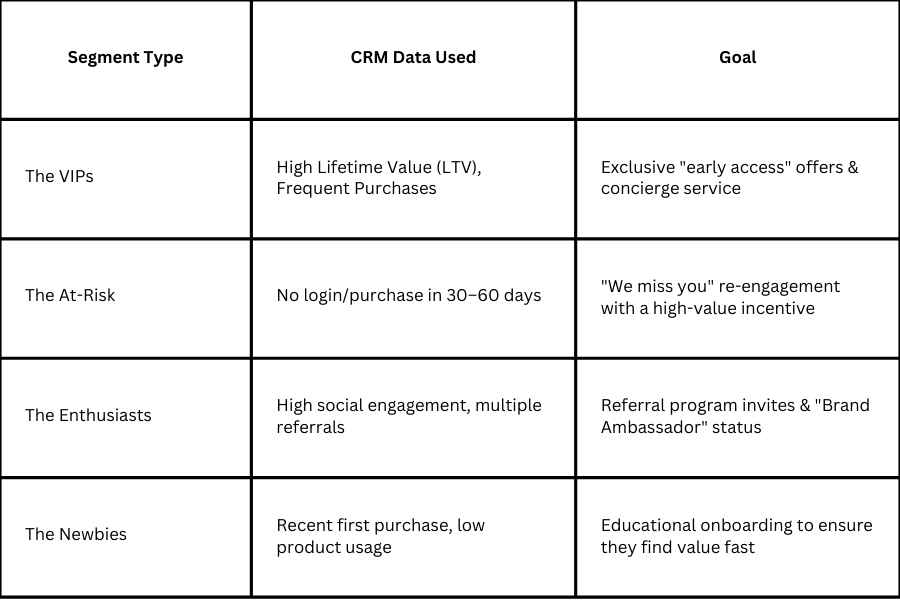
If a customer bought running shoes six months ago, don’t send them an ad for high heels. Send them a replenishment reminder for new insoles or a guide on "How to Hit Your First 10k." How CRM systems improve customer retention is by using granular segmentation.
The Anatomy of a Perfect Segment:
3. Predictive Analytics: The Business Crystal Ball
Imagine if you could tell a customer was going to leave before they even knew it. Sounds like science fiction? Nope, just a modern CRM with a dash of AI.
Modern systems analyze patterns through Machine Learning. If a customer typically logs in four times a week but suddenly drops to once a month, the CRM flags them as a "churn risk." How CRM systems improve customer retention is by moving your team from reactive (waiting for the fire) to proactive (preventing the spark).
Spotting the Churn Signals
Instead of waiting for the "Cancel Subscription" email, your account manager gets an automated alert to check in. A simple, human message can save the day:
"Hey Sarah, noticed you haven't been using the platform lately—is there anything I can help you with or any features you're struggling to find?"
This proactive reach-out often catches technical hurdles or simple forgetfulness before they turn into a permanent departure.

4. Automation: The 24/7 Relationship Manager
Let’s be honest: you’re busy. Your team is busy. Following up with every single customer manually is an impossible task. This is where automation saves the day (and your sanity).
Automation doesn't mean being "robotic"; it means being consistent. How CRM systems improve customer retention through automation includes:
Post-Purchase Check-ins: Automatically send a "How are you liking it?" email 14 days after a purchase. This opens a door for feedback before a small annoyance becomes a reason to quit.
Milestone Celebrations: "Happy 1-year anniversary! Here’s a discount/gift for being awesome." Recognizing the length of the relationship builds emotional equity.
Educational Drip Campaigns: If someone buys a complex software or product, the CRM can send a series of "How-to" videos. If they don't know how to use it, they won't keep paying for it.
When customers feel guided and supported through their journey, they don’t feel the need to look elsewhere.
Pro Tip: A CRM is only as good as the information that you put into it. Remember to fill out the notes section after each conversation. Fill out as much as you can on their profile. Remembering Junior played in a championship soccer tournament or that little Susie is a Girl Scout and selling cookies is a good way to bond with your client (and a good way to get a Thin Mint supply!)
5. Omnichannel Consistency: Being Everywhere at Once
Your customers live on WhatsApp, Instagram, Email, and Phone. They don't think in terms of "channels"—they think in terms of "the brand." If they reach out on Twitter but your support team only sees emails, you have a fragmented experience that breeds frustration.
How CRM systems improve customer retention is by unifying these channels. An "Omnichannel" approach ensures that whether a customer DMs you or calls you, the conversation continues exactly where it left off.
In 2026, 81% of brands agree that consolidating conversations into one system is the #1 way to improve the customer experience. It removes the friction of "starting over" and proves that your brand is listening, no matter where the customer chooses to speak.
6. Feedback Loops: Turning Complaints into Gold
A CRM isn't just for pushing information out; it's for pulling feedback in. By integrating surveys—like Net Promoter Score (NPS) or Customer Satisfaction (CSAT)—directly into your CRM, you can track satisfaction in real-time.
The Service Recovery Paradox
If a customer leaves a negative review, the CRM can automatically trigger a high-priority task for a manager to call them. When a business takes the time to fix a mistake, that customer often becomes more loyal than if the mistake had never happened.
This is known as the Service Recovery Paradox. A CRM ensures that no complaint falls through the cracks, allowing you to turn a potential "churn" into a "loyal legend."
The ROI of Retention: Let’s Do the Math
If you're still on the fence about whether a high-end CRM is worth the investment, let's look at the numbers. A 10% improvement in retention often leads to a 20-30% increase in referral volume, creating a "flywheel effect" where your current customers become your most effective sales force.
The mathematical impact on your bottom line looks like this:
Total Revenue = (New Customers) x Average Spend) + (Existing Customers x Retention Rate x LTV)
As you can see from the formula, the Retention Rate is the multiplier. If that number is low, your total revenue will always struggle, no matter how many new customers you bring in. You are essentially trying to fill a bucket with a massive hole in it. By increasing the retention rate, you are exponentially increasing the value of every single customer you've ever earned.
Your Retention Roadmap
So, we’ve covered a lot. If your head is spinning, here is the simplified cheat sheet on how CRM systems improve customer retention:
Unify the Data: Stop the "Who are you again?" conversations.
Segment Like a Pro: Deliver relevance, not spam.
Predict the Future: Use AI to spot churn before it happens.
Automate the Love: Set up "Surprise and Delight" triggers.
Listen and Learn: Use feedback to constantly improve.
The goal isn't just to keep a customer; it's to build a community of people who feel understood and valued. In a world of infinite choices, being the brand that actually knows its customers is the ultimate competitive advantage.
__________________________________________________________________________________
The next question is...how do I find a good one and how much is it going to cost?
The same question we had at SparkUpBiz Services when we realized that in order to compete in today's business world it would have cost us $200 per user per month and that didn't even cover the additional subscriptions we would still need to be effective. While speaking (really whining) to he agreed with us...then 6 months later he came to us and asked us to check out SwingSwing CRM.
We LOVE our CRM and it does so much more than any other we've tried over the years (like seriously...we think we've worked on just about every one that is out there). It's specifically made to be cost effective for businesses of all sizes and it works. It has so many capabilities that the list would be pages and pages (we know...we tried writing it down at one point.). Starting at $99, (which includes the first 5 logins), let us know if you'd like a demo. It's a real game changer and we would love to work with you!