The Ultimate Guide: How to Choose the Best Payment Processor for Your Business
In the grand theater of commerce, there is nothing quite as satisfying as the "cha-ching" of a successful sale. Whether it is the digital chime of an e-commerce notification or the physical whir of a card reader, that sound represents the lifeblood of your company. However, before that money hits your bank account, it has to travel through a complex, often confusing maze of digital handshakes and fee-collecting gatekeepers.
Choosing a partner to handle your money is one of the most significant decisions you will make. Pick the right one, and your operations hum along with invisible efficiency. Pick the wrong one, and you’ll find yourself buried in a mountain of "hidden" fees, dealing with "held" funds, and trying to explain to a frustrated customer why their perfectly valid card was declined for the third time.
If you have ever looked at a merchant statement and wondered if you accidentally subscribed to a secret society with its own cryptic language, you are not alone. This guide is designed to strip away the jargon and help you understand exactly how to choose the best payment processor for your business in 2026.
1. Decoding the Language: Who’s Who in Your Money’s Journey?
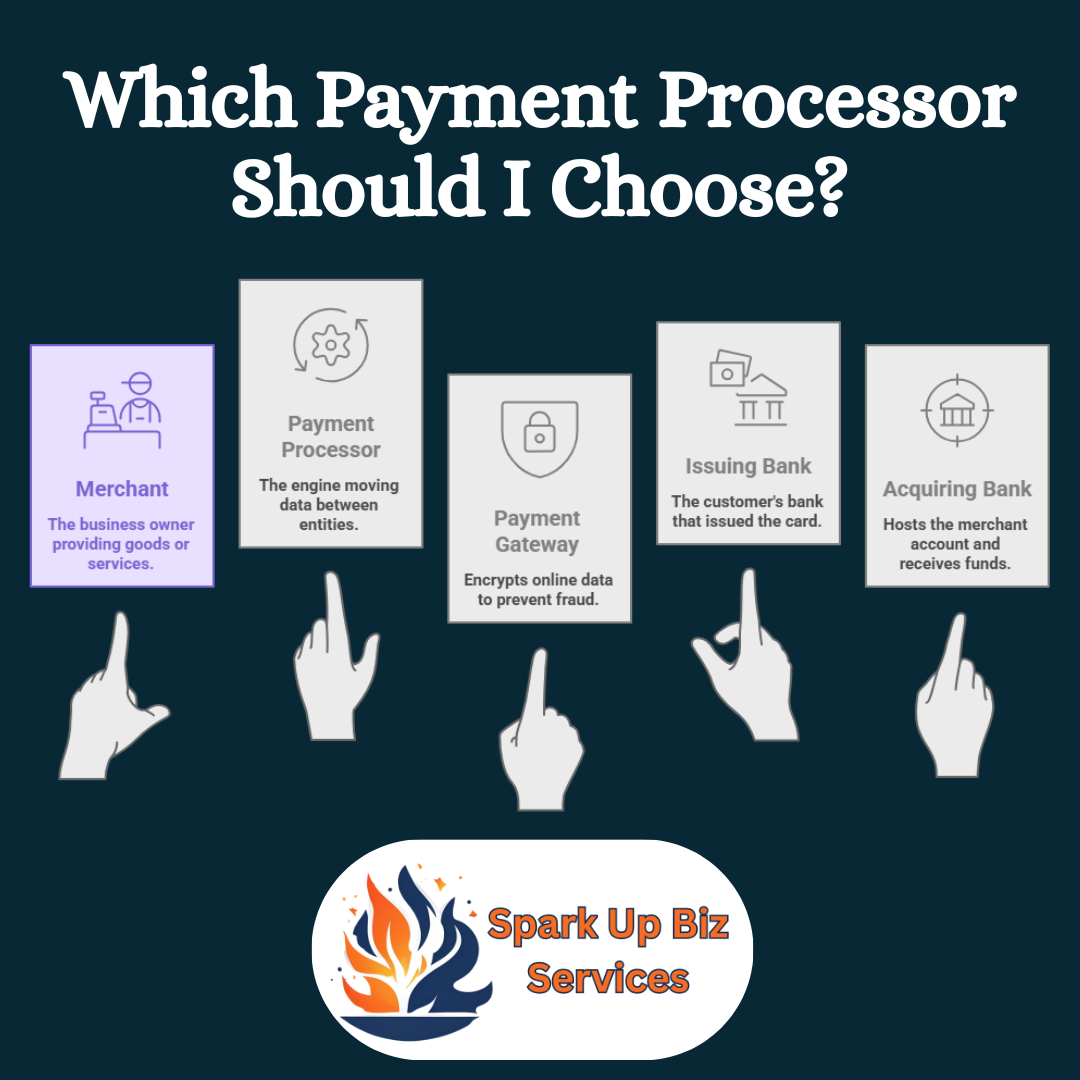
Before we dive into the "how," we need to understand the "who." When a customer swipes a card, several entities jump into a digital huddle.
The Merchant (That’s You): The brave entrepreneur providing goods or services.
The Payment Processor: The engine under the hood. They move the data between the merchant, the networks, and the banks.
The Payment Gateway: Think of this as the digital tunnel for online sales. It encrypts the data to make sure a hacker doesn't buy a yacht on your customer’s dime.
The Issuing Bank: The bank that gave your customer the card.
The Acquiring Bank: The bank that hosts your merchant account and receives the funds.
When you look for the how to choose the best payment processor for your business, you are essentially looking for the captain of this team. You want someone who plays well with others and doesn't take too big a "convenience" cut.
2. The Great Fee Hunt: Understanding What You’re Actually Paying
If payment processing fees were a movie, they’d be a psychological thriller. You think you know what’s happening, and then—bam—a plot twist in the form of a "PCI Non-Compliance Fee." To find the how to choose the best payment processor for your business, you have to master the three main pricing models.
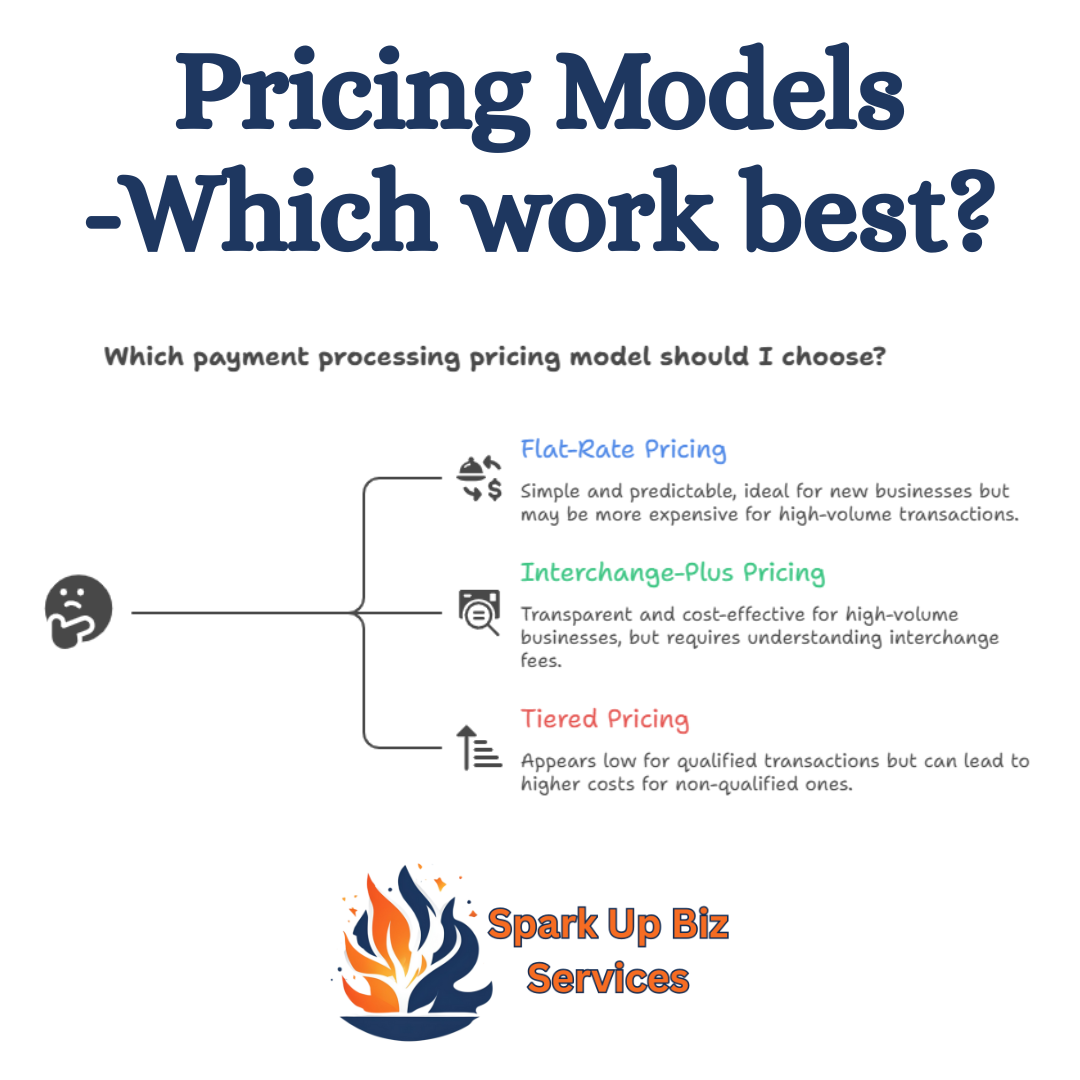
Flat-Rate Pricing
This is the "buffet" of pricing. You pay a fixed percentage (and usually a small flat fee) for every transaction, regardless of the card type. It is simple, predictable, and great for new businesses. However, simplicity comes at a price; you are often paying a premium to cover the processor's risk on more expensive cards. This is typically the most expensive model.
Interchange-Plus Pricing (Usually the least expensive option!)
This is widely considered the most transparent model. You pay the actual "interchange" fee (set by the card networks, currently the average Interchange Rate is about 1.81%) plus a small, clearly defined markup from the processor. If you are doing significant volume, this is usually the path to the lowest effective rate. This can also be referred to as Wholesale, Cost, or Pass-through as well.
Tiered Pricing
The "wolf in sheep’s clothing." Transactions are grouped into "qualified," "mid-qualified," and "non-qualified." While the "qualified" rate looks incredibly low in the marketing materials, you may find that almost none of your actual transactions meet those strict criteria, leaving you paying much higher rates than expected. (Be wary of tier pricing...some of the tiers can really jack the rate up)
Pro Tip: Always ask for your "Effective Rate." Divide your total fees by your total sales volume. That is the only number that truly matters when determining how to choose the best payment processor for your business.
3. Beyond the Percentage: Features That Actually Matter
Low fees are great, but if your processor goes down on Black Friday, a 0.1% savings won't pay your rent. When researching how to choose the best payment processor for your business, look for these "Must-Haves."
Security and Compliance
In 2026, security isn't just a feature; it's a legal requirement. Your processor should handle the heavy lifting of PCI DSS compliance. Look for features like Tokenization, which replaces sensitive card data with a random string of characters. If a hacker steals a token, they’ve essentially stolen a bag of Monopoly money.
Integration Capabilities
Your payment processor should be the "social butterfly" of your business tech stack. It needs to talk to your accounting software, your CRM, and your e-commerce platform. If you have to manually export CSV files every night just to see who paid you, you haven't found the right partner yet.
Funding Speed
In business, cash is king, but cash flow is the king's boss. How long does it take for your money to move from the customer’s card to your bank account? Some processors offer "Next Day" or even "Same Day" funding. If a processor wants to hold your funds for 7 to 10 days, they aren't a partner: they’re a slow-motion bank heist. (Some high-risk solutions do hold for 48 hours but it's due to the risk profile. We would advise you upon sign up.)
4. The Human Element: Support When Things Go "Clunk"
At some point, something will go wrong. A terminal will freeze, or a large transaction will be flagged as suspicious. This is where you find out if you actually figured out how to choose the best payment processor for your business or if you just bought a fancy website.
Avoid companies that only offer "AI Chatbots" or support via email tickets that take 48 hours to resolve. You want a partner who provides:
24/7 Phone Support (with actual humans).
Dedicated Account Management for larger volumes.
A proactive risk department that calls you before they freeze your account.
5. Identifying Red Flags
When you are narrowing down how to choose the best payment processor for your business, keep a sharp eye out for these deal-breakers:
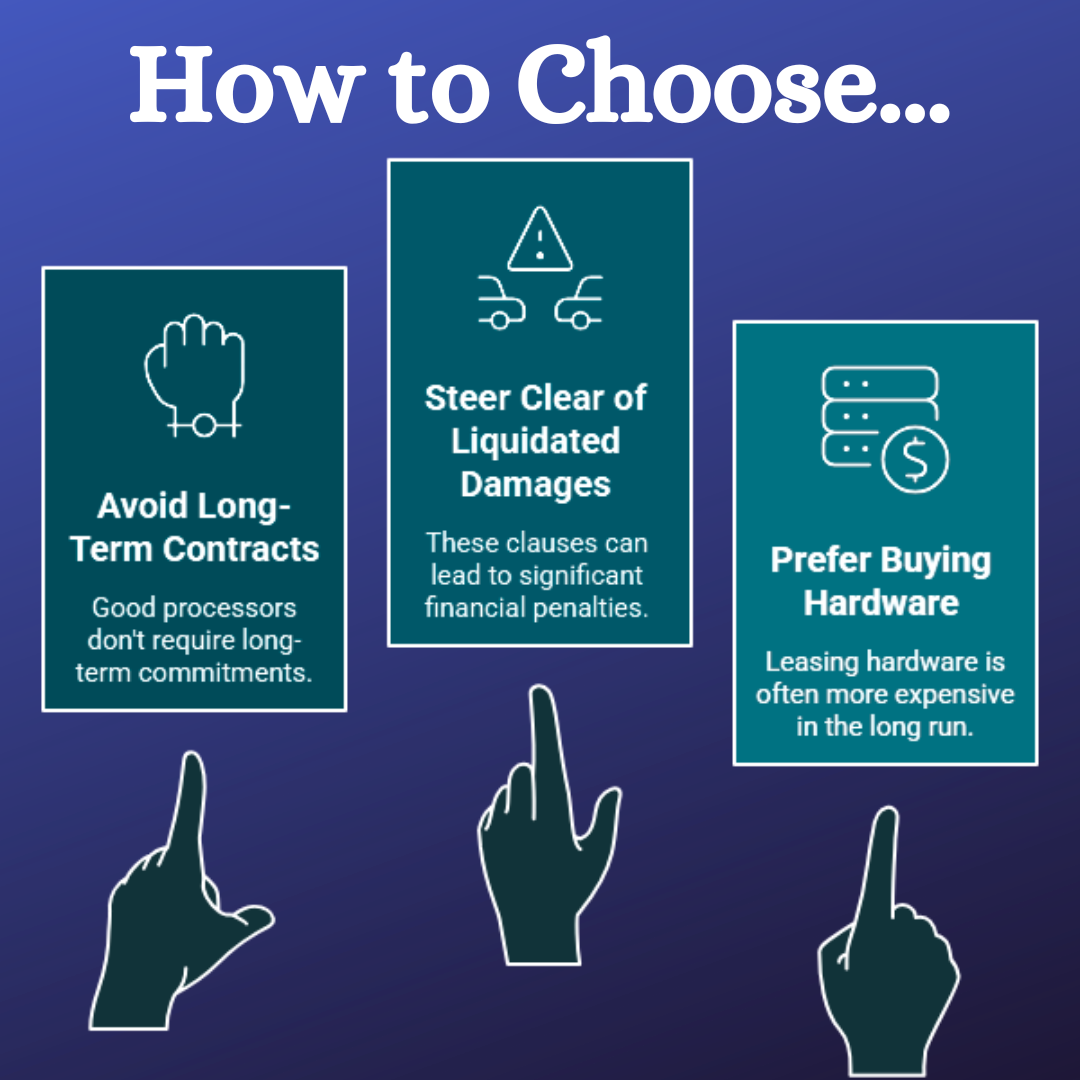
Long-Term Contracts: If they are good at what they do, they shouldn't need to legally kidnap you for three years.
Liquidated Damages: If you see this in a contract, run. It means if you leave early, you owe them all the profit they would have made from you.
Leased Hardware: Buying a terminal might cost $300. Leasing one might cost $40 a month for four years. We’ll let you do the math, but spoiler alert: the math is bad. (We do have several programs that will actually lend you the terminals. You would just return them if you left our program. Feel free to ask us about these programs!)
The Savvy Merchant
Selecting a financial partner is about balancing cost, technology, and trust. The best processor for a seasonal pop-up shop isn't the same as the best processor for a high-volume SaaS company.
To truly master how to choose the best payment processor for your business, you must look past the shiny hardware and the "teaser" rates. Demand transparency, prioritize security, and never settle for a partner who treats your business like just another number in a spreadsheet. After all, it’s your hard-earned money—make sure the person handling it respects it as much as you do.
_______________________________________________________________________
We would love to work with you. Schedule a call with us and we can walk you through your current program and what you're actually paying and then we can find a solution that works best for you. We typically save our clients money. One of our advantages is...where other suppliers only work with one bank, we actually work with about 15. It helps us get you the best rates and the best program to fit your needs.