
Our Latest Articles
The Ultimate Guide to CRM for Subscription Businesses: Scaling Recurring Revenue Without the Headaches
There is a distinct, undeniable beauty to the subscription business model. On paper, it looks like absolute magic. You bring in a customer once, and like clockwork, predictable monthly cash flow rolls into your merchant account while you sleep. It is the ultimate entrepreneurial dream, wrapped in a neat little bow of compounding growth.
But anyone who actually operates a recurring revenue company knows that beneath that serene, predictable surface lies an absolute logistical monster.
Managing a subscription business is a completely different ballgame than traditional transactional retail. You aren’t just trying to convince a shopper to buy a single widget, swipe their credit card, and walk off into the sunset. You are trying to build an ongoing, multi-year relationship where billing occurs seamlessly every 30 days, credit cards never expire (spoiler alert: they do, constantly), and customer profiles are tracked perfectly across upgrades, downgrades, and trial periods.
When standard, old-school software platforms attempt to handle this complexity, they crumble into a sad pile of broken data. They treat every interaction as a one-off sale.
To survive and thrive in the modern recurring economy, merchants need a specialized engine: a CRM for Subscription Businesses.
In this comprehensive, deep-dive guide, we will unpack exactly why traditional data management tools fail recurring revenue models, what a dedicated subscription CRM actually does, how it supercharges your payment processing infrastructure, and how you can leverage it to stop churn in its tracks. Let’s dive in.
Part 1: The Relational Shift — Why Your Old CRM is Ghosting Your Subscription Needs
To understand why a CRM for Subscription Businesses is mandatory for your sanity, we have to look at the fundamental architecture of software.
Traditional tools were built for linear sales funnels. Once the deal is marked "Closed-Won," the system essentially dusts off its hands, punches a sales rep on the back, and waits for the next new lead to drop into the top of the funnel. If your business sells one-time items—like custom-engraved bowling balls or giant industrial trampolines—this model works perfectly.
But in a subscription model, "Closed-Won" is not the finish line. It is the starting gun.
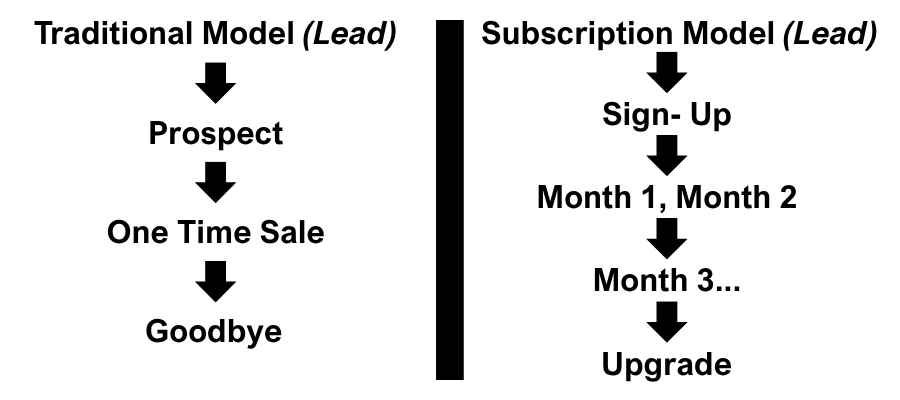
When you operate a recurring revenue model, your relationship with the customer is dynamic, living, and constantly changing. On any given Tuesday, a single customer might decide to:
Upgrade from a Basic Plan to a Premium Tier.
Add three extra user seats for their newly hired team members.
Pause their billing for 60 days while they go on an off-grid sabbatical.
Update their financial information because their previous card was compromised.
If your customer data lives in a standard system that doesn't understand recurring relationships, and your billing history lives in an isolated payment gateway, your internal team is flying completely blind.
Your sales team will see an account marked "Active," completely unaware that the customer's last three automated payment attempts failed. Your support team will chat with a frustrated subscriber, unable to see that they are actually an enterprise-level high-value client who deserves white-glove treatment.
A CRM for Subscription Businesses acts as the ultimate single source of truth. It marries rich customer profiles, behavioral tracking, communication history, and real-time financial metrics into one unified dashboard. It understands that a customer is not a static invoice, but an ongoing relationship that needs constant nurturing.
Part 2: The Core Anatomy of a Subscription CRM
What exactly makes a specialized CRM for Subscription Businesses so powerful? It comes down to features explicitly engineered to handle recurring operational lifecycles without causing your operations team to pull their hair out. If you are shopping around for a system or evaluating your current setup, these are the non-negotiable building blocks you must look for.
1. Unified Subscription Lifecycle Tracking
Your system must track the exact status of a subscriber at any micro-moment. It should cleanly differentiate between various states:
Trial Period: Users testing your service before making a financial commitment.
Active: Fully paid subscribers in good standing with clear accounts.
Past Due / In Grace Period: Customers whose automated payment failed, but whose service has not yet been cut off.
Paused: Subscribers who temporarily stopped their service with the explicit intent to return.
Churned: Customers who canceled their subscriptions voluntarily or involuntarily.
A proper CRM for Subscription Businesses lets you build automated workflows triggered by changes in these exact states. For instance, the moment a user moves from "Active" to "Past Due," the system should immediately kick off an automated, empathetic communication sequence rather than waiting for a manual review at the end of the month.
2. Deep Integration with Modern Payment Processing
This is where the magic truly happens. Your customer data must talk to your financial processing data in real time.
When a customer calls your support line to ask why their account is locked, your representative shouldn't have to log into a separate merchant account portal to find out that the credit card on file returned a specific decline code.
A specialized subscription CRM pulls payment processing data directly into the customer’s timeline. It tracks the lifetime value, subscription plan variations, and exact payment history side-by-side with every email, support ticket, and phone call.
3. Subscription-Specific Analytics and Revenue Reporting
Standard sales reports show you total revenue generated this month. While that’s nice, it is practically useless for a subscription operator. Subscription businesses live and die by specific health metrics. A CRM for Subscription Businesses must calculate and track these automatically:
MRR and ARR (Monthly and Annual Recurring Revenue): The foundational baseline of your predictable income.
LTV (Customer Lifetime Value): The total net revenue you expect to earn from a single customer over the entire duration of their relationship with your business.
CAC (Customer Acquisition Cost): Exactly how much marketing and sales spend it takes to win a single new subscriber.
Churn Rate: The percentage of your subscriber base that cancels their services within a given timeframe.
Without these metrics baked directly into your customer database, you cannot make informed strategic decisions. If your CAC is higher than your LTV, you aren't running a sustainable business—you are running an expensive charity. A subscription CRM shines a bright light on these ratios so you can adjust your pricing, marketing, and retention strategies instantly.
Part 3: The Secret Killer — Defeating Involuntary Churn
Let's talk about the silent killer of recurring revenue: churn.
When merchants think about customer churn, they usually picture an unhappy customer actively clicking a "Cancel Subscription" button because they no longer want the service. That is voluntary churn. It hurts, it’s disappointing, but it is straightforward to understand.
But there is a second, far more insidious villain lurking in the shadows: involuntary churn.
Involuntary churn happens when a customer loves your product, wants to keep paying you, has every intention of remaining a subscriber, but their automated transaction fails behind the scenes.
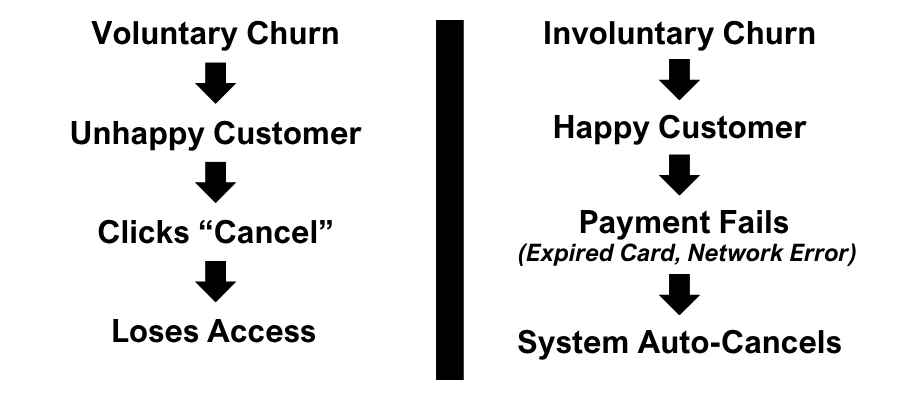
Why do payments fail? The list of reasons is endless:
The credit card reached its expiration date.
The bank flagged the recurring transaction as suspected fraud.
The cardholder hit their temporary credit limit.
A temporary server timeout occurred between processing networks.
If your business relies on a basic CRM paired with a rigid, unoptimized billing tool, a failed payment usually triggers an immediate, robotic system cancellation. You lose a happy customer, and they lose a service they enjoyed, simply because of a digital clerical error.
An advanced CRM for Subscription Businesses acts as a powerful shield against involuntary churn by automating smart, sophisticated dunning management and recovery protocols.
Automated Smart Retries
Instead of giving up immediately after a single payment failure, a subscription CRM coordinated with your payment processing engine can execute automated retries spaced intelligently over several days. For instance, if a card fails on a Friday because of a temporary bank hold, retrying it on the following Tuesday often yields a 100% success rate without ever bothering the customer.
Automated Account Dunning Sequences
If smart retries fail, the CRM takes over the communication layer. Instead of sending a cold, aggressive billing notice ("PAY US NOW OR ELSE"), it fires off a friendly, branded alert.
The email contains a secure, single-click link where the customer can update their credit card info directly on their mobile phone, without needing to remember a complex portal password.
Pre-emptive Expiration Management
Why wait for a card to fail? A CRM for Subscription Businesses can look ahead at your customer database, identify whose cards are set to expire next month, and automatically email them a proactive reminder to update their details before the billing cycle even hits. This turns a potential payment disaster into a completely invisible, smooth transition.
Part 4: Choosing Your Pricing Architecture — Flexibility Wins
In the subscription landscape, rigidity equals death. Consumer expectations are incredibly high, and merchants must adapt their monetization models to match customer usage patterns.
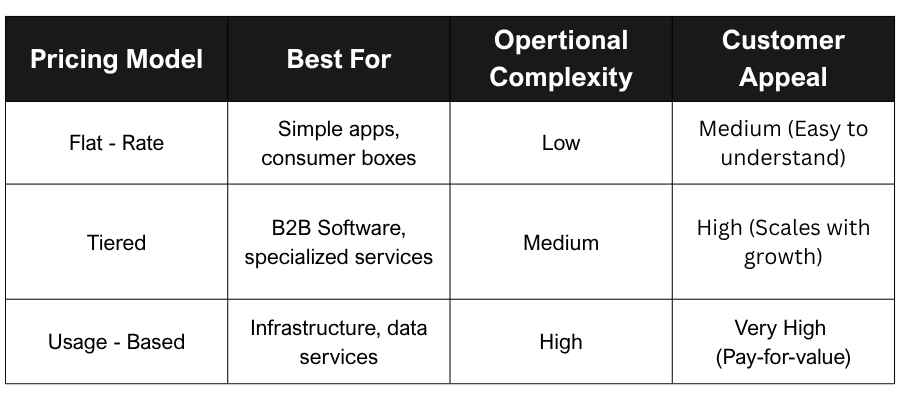
When you implement a dedicated CRM for Subscription Businesses, you gain the structural freedom to experiment with complex pricing strategies that traditional databases simply cannot comprehend. Let's break down the primary pricing archetypes that your system should support:
1. Flat-Rate Pricing
The simplest model available. One set price per month or per year for a single, unchanging service. While easy to manage, it lacks nuance. It treats a small startup and a massive multinational enterprise exactly the same, often leaving significant money on the table.
2. Tiered Pricing
The golden standard for modern software and service companies. You offer multiple packages (e.g., Bronze, Silver, Gold) with varying feature sets, volume limits, or support levels.
A specialized subscription CRM makes it incredibly easy for account managers to transition customers between these tiers smoothly, automatically calculating pro-rated amounts so the customer is billed accurately down to the exact day of their upgrade.
3. Usage-Based / Metered Pricing
The fastest-growing model in the recurring ecosystem. Customers only pay for what they actually use—whether that's gigabytes of data stored, API calls made, or boxes of physical coffee shipped.
To execute this safely, your CRM for Subscription Businesses must continuously ingest consumption data from your infrastructure, map it perfectly against the customer's profile, and pipe that information accurately into your billing processing gateway at the end of every cycle.
Part 5: The Operational Benefits of a Unified Tech Stack
When your front-of-house customer relationships and your back-of-house payment processing operate out of the same synchronized database, every single department in your company gets an immediate efficiency upgrade. Let's look at how a CRM for Subscription Businesses transforms daily operations across your entire organization.
The Sales Team: Precision Upselling
Instead of guessing which accounts are ready for an upgrade, your account executives can look at their dashboard to see exactly how close a client is to hitting their plan limits.
If a subscriber on the Silver Plan has used 95% of their monthly allocation with two weeks left in the cycle, the CRM can automatically alert the assigned sales rep to reach out with a personalized, consultative upgrade offer. This turns cold calling into warm, highly relevant customer assistance.
The Customer Support Team: True Context
Nothing frustrates a customer more than explaining their entire account history to a support agent who has zero context. With a subscription CRM, the moment a customer opens a live chat, the agent instantly sees their lifetime value, their current plan tier, their entire communication history, and their payment health status.
If the client has an outstanding past-due invoice, the support agent can handle the billing issue gracefully right then and there, saving the customer an extra trip to an accounting email address.
The Finance Team: Automated Reconciliation
For accounting teams, subscription models can easily turn into a manual reconciliation nightmare of pro-rated invoices, chargebacks, tax calculations, and multi-currency conversions.
A dedicated CRM for Subscription Businesses automates the heavy lifting. Because every subscription event is tied directly to a customer account and a processed payment transaction, your financial data remains perfectly clean, making tax season and end-of-month book closing an absolute breeze.
Part 6: Key Implementation Strategies for Long-Term Success
Deciding to deploy a specialized CRM for Subscription Businesses is an excellent first step, but execution is what separates successful merchants from stressed-out ones. To ensure your transition or upgrade goes flawlessly, keep these strategic implementation rules top of mind.
Prioritize Absolute Data Cleanliness
Before migrating your existing customer records into a new subscription CRM, take the time to audit and clean your data stack. Eliminate duplicate accounts, verify historical lifetime value inputs, and ensure your customer contract start dates are perfectly aligned. Garbage data in means garbage automation out. Starting with a clean slate ensures your automated workflows fire exactly when they are supposed to.
Map Out Your Customer Journey Visually
Before configuring your automated email dunning paths, retry schedules, and renewal notifications, map out the entire subscriber journey on a physical whiteboard or digital canvas.
Ask yourself:
What exactly happens when a user's trial expires?
How many days should pass before a second failed payment attempt occurs?
What friendly messaging should a customer receive 30 days before their annual subscription auto-renews?
Visualizing these paths prevents conflicting automations from overlapping and ensures your customer experience remains cohesive, logical, and deeply human.
Keep Customer Communication Empathetic
When configuring automated subscription notices—especially regarding failed payments or upcoming renewals—always maintain a warm, human, and helpful tone. Avoid dry, cold, corporate legalese.
Remember, a failed credit card payment is almost never a malicious attempt to steal your services; it is usually just a busy human being whose bank issued them a new card with a different security code. Treat them like a valued partner, make the update process dead-simple, and they will stay loyal to your brand for years to come.
Future-Proofing Your Recurring Growth
The subscription economy is moving incredibly fast, and consumer expectations are only going up. Merchants cannot scale a world-class recurring revenue engine using manual spreadsheets, disjointed point solutions, or archaic transaction-based tools.
By anchoring your organization around a dedicated CRM for Subscription Businesses, you build a rock-solid operational foundation. You break down the artificial walls between your customer relationships and your payment processing systems. You gain access to the real-time reporting metrics required to guide your growth strategy, and you build an automated fortress that protects your business from the costly drains of involuntary churn.
Invest in the right infrastructure, treat your payment processing data as a core pillar of your customer experience, and watch your compounding recurring revenue scale to heights you never thought possible.

Connect